
Is Tonsillitis Contagious? What You Need to Know
03/10/2026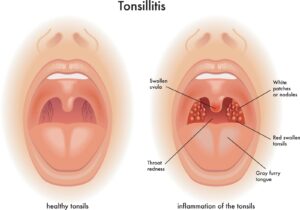
If you or your child has a sore throat, swollen tonsils, and a fever, your first question is likely, “Is this contagious?” At Coastal Ear, Nose and Throat, our board-certified specialists hear this question every day. The short answer is yes—most cases of tonsillitis are contagious—but understanding why and for how long is key to preventing its spread.
What Is Tonsillitis?
Tonsillitis is an inflammation of the tonsils, which causes them to become swollen, irritated, and often painful. The tonsils are two oval-shaped pads of tissue located at the back of the throat—one on each side—and they play a role in helping the body fight infection. Tonsillitis most commonly affects children and teenagers, but adults can get it too. In many cases, it’s caused by a viral infection, though bacterial infections—such as strep throat—are also possible.
Common Symptoms of Tonsillitis
Symptoms can range from mild to severe and may include:
- Sore throat
- Red or swollen tonsils
- White or yellow patches on the tonsils
- Painful or difficult swallowing
- Fever and chills
- Swollen lymph nodes in the neck
- Fatigue
- Bad breath (halitosis)
If these symptoms sound familiar, you’re not alone—and help is available.
Is Tonsillitis Contagious?
Tonsillitis itself isn’t always contagious, but the infection causing it often is.
When Tonsillitis Is Contagious
Tonsillitis is contagious when it’s caused by:
- Viruses (the most common cause)
- Bacteria, such as Streptococcus pyogenes (strep throat)
These infections spread easily through:
- Coughing or sneezing
- Sharing drinks, utensils, or food
- Close personal contact (kissing, hand-to-mouth contact)
When Tonsillitis Is Not Contagious
Tonsillitis is not contagious when it’s caused by:
- Allergies
- Acid reflux (GERD)
- Chronic throat irritation
- Environmental factors like smoke or pollution
Because symptoms can look very similar, it’s nearly impossible to tell the difference between viral and bacterial tonsillitis at home. A simple throat exam and rapid strep test at Coastal ENT can provide clear answers and guide the right treatment.
Viral vs. Bacterial Tonsillitis
Understanding the cause of tonsillitis is important because it affects both treatment and how long the infection can spread.
- Viral tonsillitis is contagious but usually improves on its own with rest, fluids, and symptom relief.
- Bacterial tonsillitis, most often caused by the streptococcus bacteria that causes strep throat, is also contagious—and requires antibiotics to prevent complications and stop the spread.
- Noninfectious tonsillitis is not contagious and is treated by addressing the underlying cause, not by antibiotics.
Only a medical evaluation can determine the cause. At Coastal ENT, we use thorough exams and rapid testing to ensure you or your child gets the right care.
How Long Is Tonsillitis Contagious?
Viral Tonsillitis
- Contagious while symptoms are present
- Typically lasts 7–10 days
Bacterial (Strep) Tonsillitis
- Contagious until 24 hours after starting antibiotics
- Without treatment, it can remain contagious for weeks
How to Prevent the Spread of Tonsillitis
If you or your child has tonsillitis, a few simple steps can help protect others:
- Wash hands frequently
- Avoid sharing food, drinks, or utensils
- Cover coughs and sneezes
- Stay home from school or work when sick
- Replace toothbrushes after starting antibiotics
These small habits can make a big difference.
When Should You See an ENT Specialist for Tonsillitis?
While many cases of tonsillitis improve with time, some symptoms should never be ignored. Consider seeing an ENT specialist if you or your child experiences:
- Severe throat pain lasting more than 3–4 days
- High fever (over 101°F)
- Trouble breathing or swallowing
- Frequent or recurring tonsillitis
- Symptoms that don’t improve with treatment
Chronic or recurrent tonsillitis may require further evaluation, and in some cases, a tonsillectomy may be recommended to provide long-term relief.
Can Tonsillitis Come Back?
Yes. Some patients experience recurrent tonsillitis, especially children and young adults.
An ENT specialist can determine whether repeated infections are due to bacterial colonization, enlarged tonsils, or immune system factors.
Frequently Asked Questions (FAQ)
Is tonsillitis more common in children?
Yes. Children are more susceptible due to developing immune systems and close contact in schools.
Can adults get tonsillitis?
Absolutely. Adults can develop both viral and bacterial tonsillitis.
Can tonsillitis go away on its own?
Viral tonsillitis often resolves without medication, but bacterial tonsillitis requires antibiotics.
Does removing tonsils stop tonsillitis?
A Tonsillectomy will eliminate tonsillitis but is only recommended when infections are frequent or severe.
Pediatric ENT Care in the Jersey Shore Area
If you’re concerned about tonsillitis—especially recurring or severe symptoms—early evaluation can make all the difference. At Coastal Ear, Nose, & Throat, our board-certified ENT specialists provide compassionate, expert care for children and adults, including:
- Accurate diagnosis of throat infections
- Child and adult-focused ENT care
- Advanced treatment for recurrent tonsillitis
- Personalized care plans for long-term relief
Call today to schedule an appointment with Coastal Ear, Nose, and Throat and get the care you and your family deserve.
Categories
- Telehealth (3)
- Coastal Hearing & Balance Center (23)
- Cochlear Implants (1)
- BAHA (3)
- Hearing Aids (10)
- Pediatric Hearing (6)
- Coastal Surgery Center (3)
- Custom Earmolds (1)
- Dizziness – Vertigo – Ménière's Disease (5)
- Ear Specialist (2)
- Hearing Loss (9)
- Hoarseness and Swallowing Disorders (3)
- Allergy Treatment (15)
- Bell's Palsy & Facial Paralysis (2)
- Coastal Ear, Nose & Throat (16)
- Laryngology & Voice (7)
- Sinusitis (12)
- Skin Care (1)
- Skull Base Surgery (1)
- Sleep Apnea (7)
- Snoring (5)
- Sore Throat (2)
- Thyroid Condition (3)
- Tinnitus (1)
- Tonsillectomy (5)
- Others (27)
Blogs
Archives
- Press Release
- Articles
- Newsletter [View Archives]