
What Are Over-the-Counter (OTC) Hearing Aids?
10/24/2022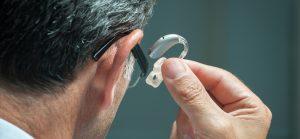
What Are Over-the-Counter (OTC) Hearing Aids?
Over-the-counter hearing aids are devices that you can buy directly from traditional retailers and pharmacies, like CVS, Walgreens or Costco, without a prescription or needing to meet with an Audiologist at Coastal ENT.
Who Is a Good Candidate for OTC Hearing Aids versus Prescription Hearing Aids?
OTC hearing aids are for adults 18 years of age or older who believe they have mild-to-moderate hearing loss. You may have mild-to-moderate hearing loss if:
- Sounds or speech seem quiet or muted to you
- You have trouble hearing in a group setting like in a restaurant, speaking on the phone, or need to face people/reading lips
- You ask others to repeat themselves or speak louder
- TV/Radio is at the highest volume
Can Children Use OTC Hearing Aids?
Currently, the FDA regulations state that OTC hearing aids are for adults (18 years of age or older). Children should see an Audiologist at Coastal ENT if they are having issues hearing properly.
What Are the Benefits and Concerns Associated with OTC Hearing Aids?
PROS: Lower cost and ease of purchase of these devices
CON: If the individual’s hearing loss comes from a medical problem, it is best to see a physician at Coastal ENT and/or an Audiologist. These conditions would be missed without an evaluation by a hearing health professional. Pain and infection can be caused by the fit of the hearing aid. If your OTC hearing aid becomes painful to put in your ear, you should see an physician at Coastal ENT or an Audiologist.
How Much Will OTC Hearing Aids Cost?
With telephone-based help and remote programming of the devices charge, OTC hearing aids can cost approximately $1,500 to $3,000. Off-the-shelf devices that do not offer those services may cost approximately $200 to $800 for a pair of devices.
Will My Insurance, Medicare, and/or Medicaid Cover OTC Hearing Aids?
Medicare currently does not cover any hearing aids. Medicaid coverage for those over 18 years old will vary by state, and you have to check with your Medicaid program. Some private health insurance plans do not cover the cost of hearing aids, so you should check with your particular insurance regarding coverage for OTC hearing aids.
Common Questions about OTC Hearing Aids
Finding the right device for you may be challenging. As more devices become available, it may become easier to select the right device for you. You should also consider these issues:
- Is it waterproof?
- Does it block out background sound?
- Does it have Bluetooth capability?
- Is it compatible with your smart phone?
- Does it come with an app to help customize my individual hearing profile?
- How long does the battery last? Is it rechargeable?
- Does it have adequate and understandable sizing choices?
Are There Other Types of Hearing Devices I Should Consider?
For people with the type of hearing loss that would benefit from OTC hearing aids, there are additional options you may consider:
- A personal amplification device may be helpful and possibly less expensive than OTC hearing aids. These devices are typically a “boxy” receiver attached to headphones and are therefore bulkier than what you would expect from hearing aids. One example is a pocket talker.
- Personal sound amplification products (PSAPs) amplify sound for the user but are intended for people with normal hearing to amplify sounds in certain situations, such as recreational activities like birdwatching, according to the FDA. PSAPs are regulated as consumer electronics and not medical devices.
- Traditional prescription hearing aids from an ENT specialist or audiologist are a good choice if you are not getting the boost you would like from OTC hearing aids. OTC devices are not tuned to a hearing test, but prescription hearing aids are tuned to your exact level of hearing.
What Are FDA “Red Flag” Conditions and What Do They Mean?
If any of the “red flags” below apply to you, we suggest you see a physician and/or Audiologist at Coastal ENT.
- Your ear has a birth defect or an usual shape or your ear was injured or deformed in an accident.
- You have had blood, pus, or fluid coming out of your ear during the past six months.
- Your ear feels painful or uncomfortable.
- You have a lot of ear wax, or you think something could be in your ear.
- You feel dizzy or have a feeling of spinning or swaying (called vertigo).
- Your hearing changed suddenly in the past six months.
- Your hearing gets worse then gets better again.
- You have worse hearing in one ear.
- You hear ringing or buzzing in only one ear.
Are There Other Resources Available to Learn More About Hearing Loss?
https://www.nia.nih.gov/health/hearing-loss-common-problem-older-adults
https://www.enthealth.org/be_ent_smart/otc-hearing-aids-faqs/
Categories
- Telehealth (3)
- Coastal Hearing & Balance Center (24)
- Cochlear Implants (1)
- BAHA (3)
- Hearing Aids (10)
- Pediatric Hearing (6)
- Coastal Surgery Center (3)
- Custom Earmolds (1)
- Dizziness – Vertigo – Ménière's Disease (5)
- Ear Specialist (2)
- Hearing Loss (9)
- Hoarseness and Swallowing Disorders (3)
- Allergy Treatment (15)
- Bell's Palsy & Facial Paralysis (2)
- Coastal Ear, Nose & Throat (16)
- Laryngology & Voice (7)
- Sinusitis (12)
- Skin Care (1)
- Skull Base Surgery (1)
- Sleep Apnea (7)
- Snoring (5)
- Sore Throat (2)
- Thyroid Condition (3)
- Tinnitus (2)
- Tonsillectomy (5)
- Others (28)
Blogs
Archives
- Press Release
- Articles
- Newsletter [View Archives]